
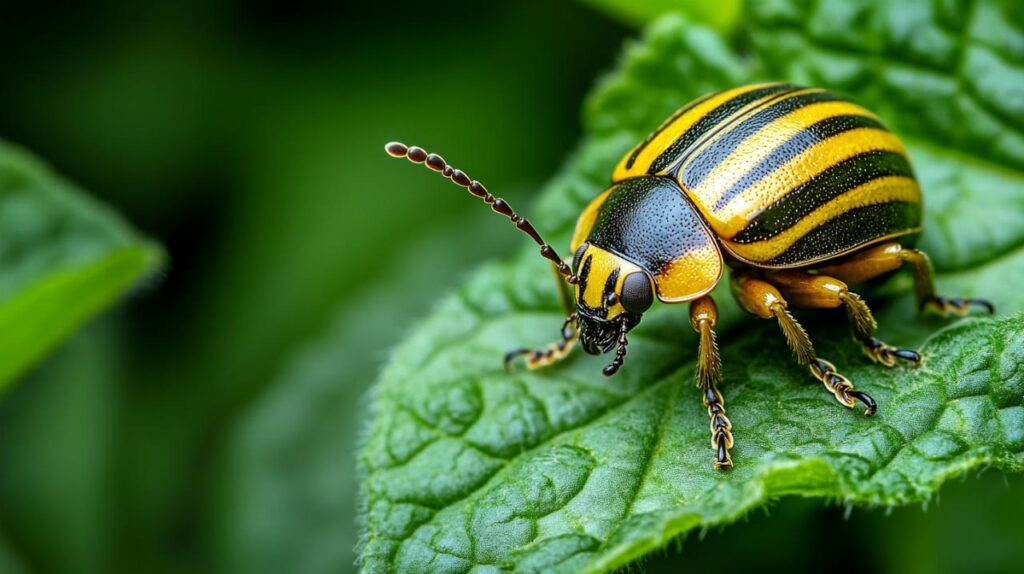
The Colorado beetle stands as one of the most formidable adversaries of gardeners and commercial growers alike, particularly those cultivating members of the nightshade family. This striking insect, with its vivid colouration and voracious appetite, has earned a notorious reputation for decimating potato crops and related plants. Understanding how to recognise the signs of infestation and the subsequent damage is essential for anyone working with solanaceous plants, as swift action can mean the difference between a bountiful harvest and complete crop failure.
Understanding the Colorado Beetle: Origins, Biology and Life Cycle
From American Origins to European Gardens: The Spread of Leptinotarsa decemlineata
The Colorado beetle, scientifically known as Leptinotarsa decemlineata, was first described in the early nineteenth century, with the initial documentation appearing in 1824. However, it was not until 1874 that this pest gained notoriety for causing serious damage to potato fields. Originally native to the Americas, this insect has since embarked on a relentless journey across continents. By 1922, the first reports of the beetle emerged in Europe, marking the beginning of a persistent challenge for European agriculture. The beetle's arrival in new territories has been met with alarm, as it quickly establishes itself and wreaks havoc on crops. In the United Kingdom, the Colorado beetle holds the status of a quarantine pest, meaning that its spread is strictly controlled to prevent establishment. Despite these efforts, sporadic detections have occurred over the years, with the most recent outbreak taking place in Kent in 2023, the first since 1977. This highlights the ongoing vigilance required to keep this invasive species at bay.
Lifecycle stages: from egg-laying to adult beetle development
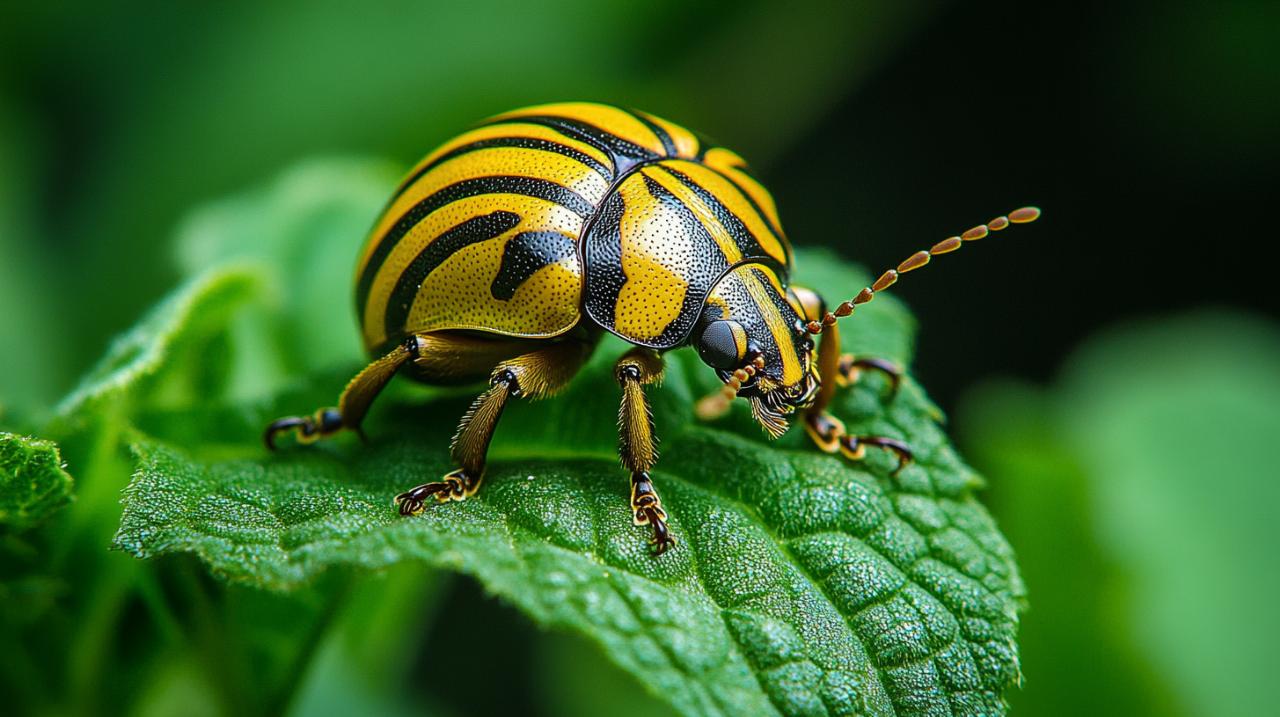
The life cycle of the Colorado beetle is a key factor in its destructive potential. A single mated female possesses an extraordinary reproductive capacity, capable of laying up to 800 eggs in her lifetime, though some sources suggest this number can reach as high as 2,000 eggs under optimal conditions. These eggs are typically deposited on the underside of leaves, where they remain until hatching. The larvae that emerge are reddish-brown, rounded, and can grow up to 15 millimetres in length, distinguished by small black spots on their bodies. During their complete larval stage, these young beetles consume approximately 40 square centimetres of potato leaves, feeding with remarkable efficiency. As the larvae mature, they eventually pupate in the soil, emerging later as adult beetles. Adult Colorado beetles are highly recognisable, measuring between 8.5 and 11.5 millimetres in length and about three millimetres in width. Their bright orange-yellow colouration is accentuated by ten distinctive black stripes running along their wing cases. Once fully developed, adults can ingest up to ten square centimetres of foliage per day, contributing further to the devastation of host plants. This rapid development and high feeding rate underscore the urgency of early detection and intervention.
Recognising Damage and Symptoms on Solanaceous Crops
Visual Signs of Infestation: Leaf Damage, Defoliation and Crop Destruction
Identifying the presence of Colorado beetles in your garden or field begins with close observation of the plants themselves. The most immediate and visible sign of infestation is damage to the foliage. Both larvae and adult beetles feed voraciously on the leaves of solanaceous plants, including potatoes, tomatoes, aubergines, and peppers. Initial damage often appears as small holes or irregular patches on the leaves, but as the infestation intensifies, the destruction becomes more severe. In advanced cases, entire leaves may be stripped away, leaving only the skeletal framework of veins behind. This defoliation can be catastrophic, as the plants lose their ability to photosynthesise effectively, which in turn hampers growth and fruit production. If left unchecked, the beetles can cause up to complete yield loss in potato crops, making vigilance absolutely critical. Wounded potato plants release significantly higher levels of volatile organic compounds, often seven to tenfold higher than healthy plants, which can further attract additional beetles to the area. This chemical signal exacerbates the problem, creating a feedback loop that draws more pests to already damaged crops.
Differentiating between larval and adult beetle feeding patterns
While both larvae and adults inflict damage, their feeding patterns exhibit subtle differences that can aid in identification and assessment of the infestation stage. Larval feeding tends to be more concentrated and aggressive, as the young beetles are in a rapid growth phase and require substantial nutrition. They often cluster on the underside of leaves, methodically consuming the leaf tissue in a relatively confined area. This can result in localised patches of severe damage, where leaves appear ragged and heavily eaten. Adult beetles, on the other hand, are more mobile and may spread their feeding activity across a broader area of the plant. They are capable of moving between plants and even between fields, which can make the damage appear more scattered. The presence of both eggs and larvae on the same plant is a strong indicator that an established population is developing, and immediate action is necessary. Observing the specific patterns of damage, along with identifying the life stages present, provides valuable information for determining the most effective control strategy.
Effective control methods: organic solutions and integrated pest management
Natural remedies: pyrethrum, baking soda and biological control agents
In the battle against the Colorado beetle, organic solutions and alternative control methods offer promising avenues for those seeking to avoid or reduce reliance on conventional chemical pesticides. Pyrethrum, a natural insecticide derived from chrysanthemum flowers, has been used effectively against a variety of pests, including the Colorado beetle. Its rapid knockdown effect can help to reduce beetle populations, particularly when applied early in the infestation. Another unconventional remedy that has garnered attention is the use of baking soda, which some gardeners have explored as a potential deterrent or direct treatment. While scientific validation of this method remains limited, anecdotal reports suggest it may offer some benefit when used as part of a broader management strategy. Biological control agents represent another cornerstone of integrated pest management. Natural enemies of the Colorado beetle, such as predatory insects and parasitoids, can be harnessed to keep populations in check. Research into chemical signals that natural enemies use to locate their prey has opened new possibilities for enhancing biological control. For instance, understanding the role of pheromones and volatile organic compounds in the beetle's communication and host plant selection can inform the development of attractants that lure beneficial insects to the affected areas.
Long-term management strategies: preventing adaptation and population growth
Sustainable management of the Colorado beetle requires a multifaceted approach that addresses not only immediate infestations but also long-term population dynamics and the risk of insecticide resistance. Crop rotation has long been recognised as an effective cultural practice, particularly when newly planted fields are situated far from the previous year's crops. This spatial separation disrupts the beetle's ability to locate new host plants easily, thereby reducing the likelihood of reinfestation. Intercropping with plants that deter or confuse the beetle can also yield significant benefits. For example, when tansy was used as an intercrop in potato fields, a substantial decrease in the number of beetles present was observed, ranging from sixty to one hundred percent. Trap crops, which are more attractive to the beetles than the main crop, can be strategically planted to concentrate the pest population, allowing for targeted control measures. The use of attractive blends combined with reduced insecticide applications has been shown to decrease chemical use by forty-four percent while maintaining similar yields to conventional methods. In some trials, the deployment of attracticides demonstrated control efficiency comparable to commercial insecticides while using ninety-two percent less active ingredient. These findings underscore the potential of integrated pest management to provide effective, environmentally responsible solutions. Early detection remains paramount, as a single female's capacity to lay hundreds of eggs means that populations can explode rapidly if not promptly addressed. If you spot a Colorado beetle, it is crucial to capture and contain it, take a photograph, note the location and date, and report it to the relevant authority. In England and Wales, reports should be directed to the Animal and Plant Health Agency at [email protected] or by calling 0300 1000 313. For Scotland, contact [email protected], and in Northern Ireland, reach out to [email protected] or call 0300 200 7847. By combining vigilant monitoring, organic remedies, biological control, and strategic cultural practices, gardeners and growers can protect their solanaceous crops from this persistent and adaptable pest, ensuring healthy plants and productive harvests for years to come.