
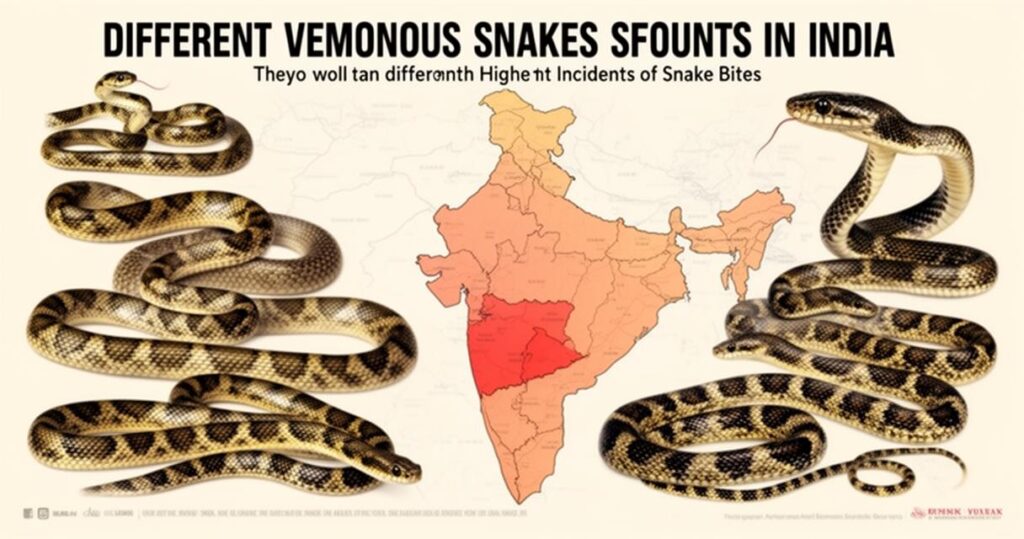
Each year, tens of thousands of lives are cut short across India due to encounters with venomous snakes, making this issue one of the most pressing public health challenges facing the nation. The sheer scale of the problem is staggering, with rural communities bearing the brunt of these tragic incidents. Understanding which snake species pose the greatest threat and learning to recognise their distinct features can prove vital in preventing fatalities and reducing long-term complications. This knowledge, paired with awareness of treatment options and the importance of rapid medical intervention, forms the cornerstone of effective snakebite management in a country where access to healthcare remains uneven and traditional beliefs sometimes delay life-saving treatment.
- India faces a severe public health crisis with approximately 50,000 annual snakebite deaths, accounting for nearly half of the global total.
- Rural populations, particularly farmers and vulnerable groups like children, suffer the highest risk due to limited medical infrastructure and geographic isolation.
- The reliance on traditional faith healers often causes life-saving delays, highlighting the need for increased awareness and rapid access to modern medical treatment.
- Local media plays a vital role in educating the public, dispelling dangerous myths, and holding policymakers accountable for snakebite management initiatives.
- The Indian government has launched a National Action Plan aiming to halve snakebite-related fatalities by 2030 through improved infrastructure and better resource allocation.
- Identifying venomous species like the Indian cobra, which is characterized by its distinct hood and potent neurotoxic venom, is essential for prevention and effective management.
Understanding the Scale of the Snakebite Crisis in India
Annual Fatalities and the Burden on Rural Communities
India shoulders an extraordinary burden when it comes to snakebite mortality, with estimates indicating that around fifty thousand people lose their lives annually due to these incidents. This figure represents roughly half of all snakebite deaths recorded globally, a sobering statistic that underscores the severity of the crisis. Over the two decades spanning 2000 to 2019, research suggests that up to 1.2 million people in India may have died from snakebites, translating to an average of fifty-eight thousand fatalities each year. These numbers reveal not just an isolated problem but a sustained public health emergency that disproportionately affects the most vulnerable segments of society. Poor rural communities, where medical infrastructure is often lacking and distances to healthcare facilities can be vast, face the greatest risk. Farmers, fishermen, hunters, and indigenous populations are particularly exposed due to the nature of their work and their frequent contact with environments where venomous snakes thrive. Children and pregnant women are also notably vulnerable to severe envenoming, as their smaller body mass and physiological conditions can exacerbate the effects of venom. The global context further highlights the magnitude of the issue, with approximately 5.4 million snakebites occurring worldwide each year, leading to around 138,000 deaths and some 400,000 cases resulting in long-term disabilities. Within Asia alone, roughly two million snakebites are reported annually, and India accounts for a significant proportion of the resulting fatalities. The problem is not confined to Asia; Africa sees between 435,000 and 580,000 incidents each year, with deaths ranging from 7,000 to 32,000, while Latin America reports between 137,000 and 150,000 snakebite cases annually, resulting in 3,400 to 5,000 deaths. By contrast, developed regions such as North America and Europe experience far fewer incidents and fatalities, with North America recording between 3,800 and 6,500 bites and up to fifteen deaths each year, and Europe seeing approximately 7,500 cases with up to five deaths. These stark contrasts highlight how snakebites predominantly affect low and middle-income countries, where healthcare systems are stretched thin and timely access to treatment can be a matter of life and death.
The Role of Media in Raising Public Awareness
Local media outlets across India have increasingly taken up the mantle of raising awareness about the dangers posed by venomous snakes, playing a crucial role in educating the public about this neglected tropical disease. Through news reports, documentaries, and community outreach programmes, journalists and broadcasters have helped to shine a light on the risks associated with snakebites and the importance of seeking prompt medical attention. This media attention has been instrumental in dispelling myths and challenging the reliance on faith healers, a practice that remains common in many rural areas and often leads to dangerous delays in treatment. By highlighting personal stories of survivors and victims, the media has humanised the statistics and brought the issue into the public consciousness, prompting calls for improved healthcare infrastructure and better access to antivenom. The coverage has also drawn attention to the broader context of snakebite envenoming as a global health priority, with organisations such as the World Health Organization setting ambitious targets to reduce snakebite deaths and disabilities by fifty per cent by 2030. In India, the government launched the National Action Plan for Prevention and Control of Snakebite Envenoming in 2024, a comprehensive strategy aimed at halving snakebite deaths by the end of the decade. Media scrutiny has helped to keep these initiatives in the spotlight, ensuring that policymakers remain accountable and that resources are directed towards the communities most in need. The role of the media extends beyond simply reporting on incidents; it also involves educating the public about the ecological importance of snakes, the need for coexistence, and the ways in which climate change may be altering the distribution and behaviour of snake populations, potentially increasing the risk of encounters in new areas.
Identifying the Most Dangerous Snake Species in India
The indian cobra and its distinctive features
Among the many snake species found across India, the Indian cobra stands out as one of the most iconic and dangerous. Recognisable by the distinctive hood it spreads when threatened, the cobra is a member of the elapid family and possesses potent neurotoxic venom that can cause respiratory failure and death if left untreated. The Indian cobra is typically dark brown or black in colour, although regional variations can result in lighter hues, and it often features a characteristic spectacle-shaped marking on the back of its hood. This snake is commonly found in a variety of habitats, from agricultural fields and rural villages to forests and grasslands, making encounters with humans relatively frequent. The cobra tends to be active during the cooler parts of the day, such as early morning and late evening, and it is known to take refuge in burrows, termite mounds, and even human dwellings. When provoked or cornered, the cobra will rear up, spread its hood, and emit a distinctive hissing sound as a warning. Bites from the Indian cobra can lead to severe symptoms, including blurred vision, difficulty swallowing, slurred speech, and progressive paralysis, all of which require immediate medical intervention. Despite its fearsome reputation, the cobra plays a vital role in controlling rodent populations and maintaining ecological balance, underscoring the need for public education that promotes respect and caution rather than indiscriminate killing.
Recognising Vipers: Russell's Viper and the Saw-Scaled Viper
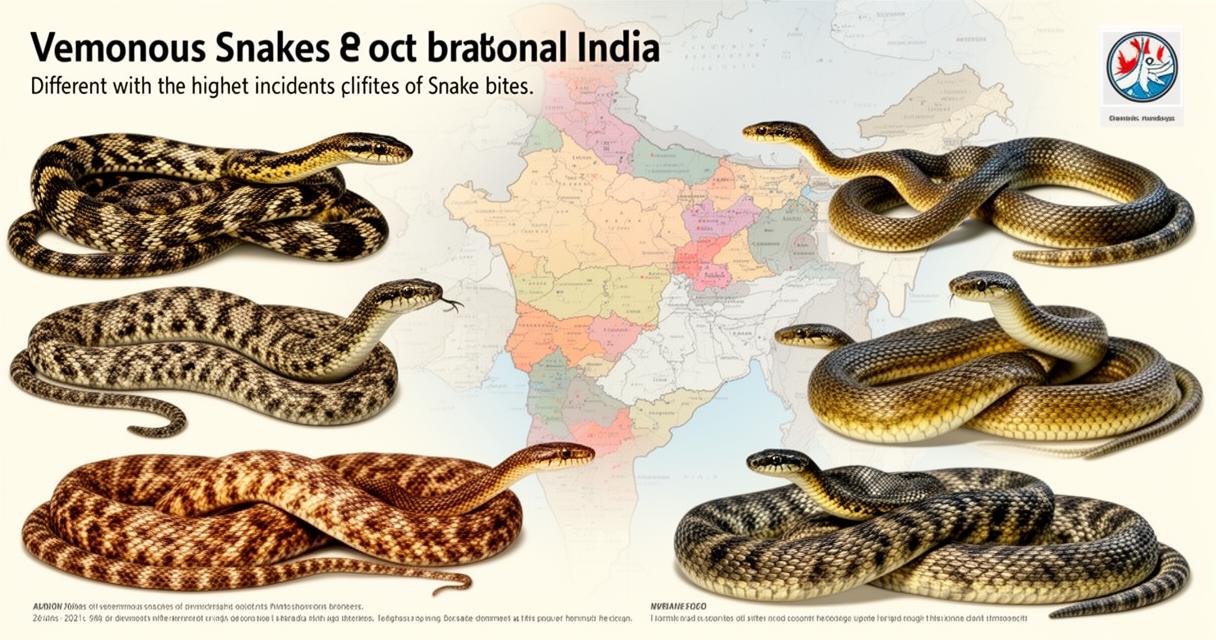
Russell's viper and the saw-scaled viper are two of the most medically significant snake species in India, responsible for a substantial proportion of snakebite fatalities and serious complications. Russell's viper is a large, stocky snake that can grow up to five feet in length, with a distinctive pattern of dark brown or black oval blotches arranged in three rows along its body. This species is predominantly found in open grasslands, agricultural areas, and scrubland, and it is particularly active during the monsoon season when rodent populations surge. Russell's viper is known for its aggressive temperament when threatened, and it can deliver a rapid strike with a significant volume of venom. The venom is haemotoxic, meaning it affects blood clotting and can cause severe internal bleeding, kidney failure, and shock. Victims of Russell's viper bites often experience intense pain at the site of the bite, swelling, blistering, and bleeding from the gums and other orifices. The saw-scaled viper, by contrast, is a smaller snake, typically measuring between one and two feet in length, but it is considered one of the deadliest due to its aggressive nature and the potency of its venom. This species is characterised by a series of oblique, light-coloured markings along its body and a distinctive defensive behaviour in which it rubs its scales together to produce a rasping sound, a warning to potential threats. The saw-scaled viper is found in arid and semi-arid regions, including deserts and rocky outcrops, and it is most active during the cooler hours of the night. Bites from this viper can result in severe haemorrhaging, renal failure, and, if untreated, death. The challenge in treating bites from both Russell's viper and the saw-scaled viper is compounded by the fact that the current antivenom used in India primarily targets four species responsible for most bites, yet studies have shown that two-thirds of patients treated with this common antivenom do not respond well to it. This has led to calls for the development of region-specific antivenoms that can more effectively neutralise the venom of these and other dangerous species.
Treatment, Prevention, and the Importance of Swift Medical Response
Antivenom availability and access across different regions
The availability and accessibility of antivenom across India remain critical factors in determining the outcome of snakebite cases. While antivenom is the cornerstone of treatment for venomous snakebites, its distribution is far from uniform, and many rural areas suffer from chronic shortages. The current antivenom formulation in India is designed to target the four most common venomous species, yet its effectiveness is called into question by recent studies indicating that a significant proportion of patients do not respond adequately to the treatment. This has highlighted the urgent need for region-specific antivenoms that can address the diversity of snake species found across the country. In many parts of India, healthcare infrastructure is severely limited, with rural health centres often lacking trained personnel, adequate diagnostic tools, and sufficient stocks of antivenom. A survey revealed that ninety-nine per cent of healthcare workers in India struggle to administer antivenom due to poor infrastructure and limited training, and nearly half of medical professionals reported serious complications in patients due to treatment delays. These delays are frequently exacerbated by the considerable distances patients must travel to reach a healthcare facility, as well as by the reliance on traditional healers in some communities, which can postpone critical medical intervention. The importance of swift medical response cannot be overstated, as timely access to treatment within minutes can be life-saving. Victims of snakebites should seek medical attention immediately, even if symptoms are not immediately apparent, as some envenomations can take time to manifest. First aid measures include keeping the victim calm, immobilising the affected limb to slow the spread of venom, and avoiding dangerous actions such as attempting to suck out the venom or applying a tourniquet. It is also crucial to avoid giving the victim alcohol or stimulants, as these can accelerate the absorption of venom. Recognising the symptoms of envenoming, which may include puncture marks, severe pain, swelling, nausea, vomiting, difficulty breathing, and changes in heart rate, is essential for guiding treatment decisions. In cases where antivenom resistance or adverse reactions occur, supportive care such as intravenous fluids, pain management, and monitoring of vital signs becomes paramount. The challenges associated with antivenom availability and access underscore the need for sustained investment in healthcare infrastructure, training programmes for medical personnel, and the development of improved diagnostic and treatment protocols.
Community Education and Preparedness for Snakebite Emergencies
Community education and preparedness are vital components of any strategy aimed at reducing the incidence and impact of snakebite emergencies in India. Public awareness campaigns that teach individuals how to identify venomous snakes, understand their behaviour, and take preventive measures can significantly reduce the risk of encounters. For instance, wearing protective footwear and long trousers when working in fields or walking through areas where snakes are known to inhabit, using a torch when moving around at night, and keeping living spaces free of rodents and debris can all help to minimise the chances of a snakebite. Education initiatives should also focus on dispelling myths and misconceptions about snakes, promoting coexistence, and emphasising the ecological benefits these creatures provide. In the United States, for example, where venomous snakes such as rattlesnakes, copperheads, cottonmouths, and coral snakes are found, public health agencies have developed comprehensive guidelines on snake identification and bite prevention. Rattlesnakes, the largest venomous snakes in the United States, are known for their ability to strike quickly, while copperheads, typically one and a half to three feet long, are not usually aggressive but can deliver painful bites if provoked. Cottonmouths, found near water and often over four feet in length, and coral snakes, which are sometimes confused with non-venomous species, also pose risks. Between seven thousand and eight thousand snakebites occur annually in the United States, resulting in approximately five deaths, with long-term injuries affecting between ten and forty-four per cent of those bitten by rattlesnakes. These figures highlight the importance of prompt medical attention and the avoidance of risky behaviours. In India, community preparedness involves training local health workers and volunteers to recognise snakebite symptoms, administer first aid, and facilitate rapid transport to medical facilities. Mobile health units and telemedicine services can also play a role in bridging the gap between remote communities and specialist care. Furthermore, understanding the concept of dry bites, which are snakebites with no venom injected and account for about fifty per cent of all bites, is important for treatment decision-making. In some species, up to eighty per cent of bites may be dry, complicating the clinical diagnosis and the decision to administer antivenom. A retrospective assessment based on the absence of symptoms and consideration of the snake species involved can guide appropriate treatment. The World Health Organization's goal to reduce snakebite deaths and disability by fifty per cent by 2030 is ambitious but achievable through sustained efforts in education, healthcare improvement, and policy reform. By empowering communities with knowledge and resources, and by ensuring that healthcare systems are equipped to respond swiftly and effectively, it is possible to turn the tide on this public health crisis and save countless lives across India and beyond.