
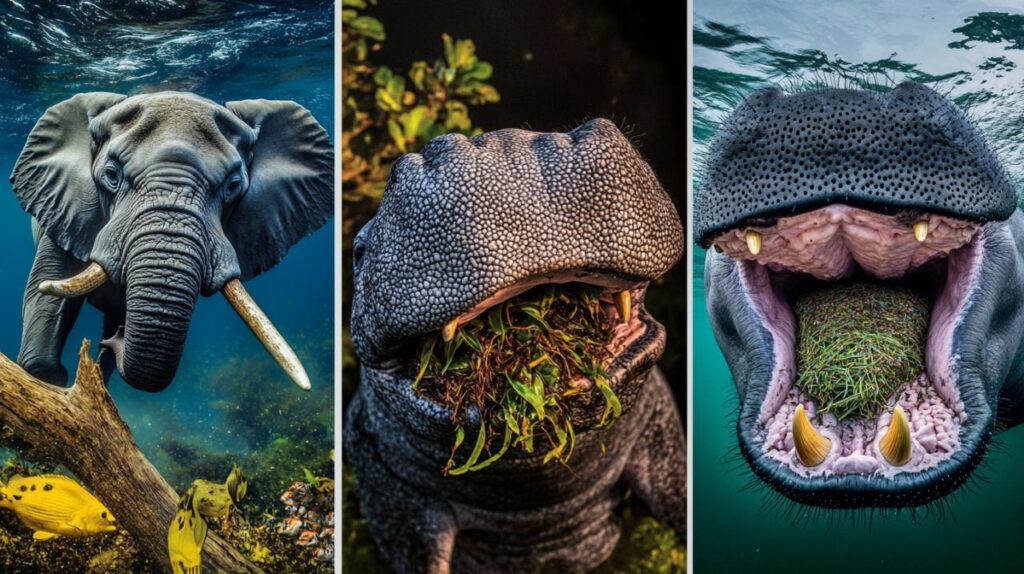
The natural world is brimming with extraordinary eaters, creatures whose daily consumption would astound even the most ambitious diners. Among these remarkable animals, elephants stand out not only for their sheer appetite but also for the intricate social frameworks that underpin their feeding behaviour. These majestic herbivores consume staggering quantities of vegetation each day, a necessity driven by their enormous bodies and relatively inefficient digestive systems. Yet what truly sets them apart is how their tightly knit family groups and matriarchal leadership shape when, where, and what they eat. Understanding elephant social structures reveals a fascinating interplay between community bonds and the relentless pursuit of nourishment.
Understanding elephant herd dynamics and feeding patterns
Elephants live in complex social units that revolve around strong familial ties. These groups, typically composed of related females and their offspring, operate under a clearly defined hierarchy that influences nearly every aspect of their daily lives. The collective nature of elephant herds creates a dynamic where feeding is not merely an individual pursuit but a coordinated effort that reflects the needs and wisdom of the entire group. This social framework ensures that even the youngest and most vulnerable members have access to vital resources.
Matriarchal leadership and foraging decisions
At the heart of every elephant herd is the matriarch, usually the oldest and most experienced female. Her knowledge of the landscape, water sources, and seasonal changes proves invaluable when it comes to locating food. The matriarch leads her family across vast territories, drawing upon decades of accumulated memory to guide them to areas where grasses flourish during the wet season or where reliable shrubs and trees offer sustenance when the land becomes parched. This leadership is not authoritarian but rather collaborative, with the matriarch considering the needs of calves, juveniles, and other adults. Her decisions about when to move and where to forage directly impact the herd's nutritional intake, ensuring that the group can meet the substantial daily requirement of consuming between one hundred fifty and three hundred kilograms of vegetation. Such guidance is especially critical during dry periods when food becomes scarce and the herd must rely on her intimate understanding of the terrain to avoid starvation.
Collective feeding behaviour across age groups
Within the herd, feeding is a communal activity that reflects the varying needs of different age groups. Young calves, still nursing and learning to navigate their environment, watch and imitate their mothers and aunts as they use their trunks to pluck leaves, strip bark, or uproot grasses. Adults spend up to sixteen or eighteen hours each day foraging, a relentless schedule that underscores the demands placed on their massive frames. The trunk itself, a marvel of muscular engineering with approximately one hundred fifty thousand individual muscle units, serves as both a delicate instrument for selecting tender shoots and a powerful tool for tearing down branches. Older elephants often create pathways through dense vegetation, making it easier for younger or weaker members to access food. This cooperative approach extends to sharing knowledge about edible plants, mineral-rich soil deposits, and even the timing of fruiting seasons. Such collective wisdom ensures that the herd maximises its nutritional intake while minimising energy expenditure, a critical balance given their inefficient digestion that captures only forty to sixty per cent of the nutrients from consumed foliage.
How social bonds shape nutritional needs in elephant communities
The strength of familial bonds within elephant herds goes beyond mere companionship; these relationships actively shape how and why elephants consume such vast quantities of food. The need to support growing calves, maintain the health of pregnant or nursing females, and sustain the entire group through seasonal fluctuations creates a dynamic where food consumption is both a personal and communal priority. Social bonds also facilitate the transmission of dietary knowledge, ensuring that each generation learns what to eat, when to eat it, and where to find it.
The Role of Family Units in Resource Allocation
Family units within the herd operate with a remarkable sense of fairness and mutual support. Nursing mothers require additional nourishment to produce milk for their offspring, who at birth can weigh between one hundred twenty and three hundred pounds and depend entirely on maternal care. The herd accommodates these needs by allowing mothers priority access to the most nutritious vegetation and by adjusting travel routes to include areas with abundant food. During times of scarcity, the matriarch might lead the group to less familiar territories, relying on her memory of past droughts and the locations of hidden water sources or resilient plant species. This resource allocation is not rigid but flexible, adapting to the health and needs of individual members. Calves, who can stand within twenty minutes and walk within an hour of birth, quickly learn to follow the herd's movements and participate in feeding activities under the watchful eyes of their relatives. The social structure ensures that even the most vulnerable members receive adequate nutrition, a testament to the cooperative ethos that defines elephant communities.
Communication and coordinated feeding strategies
Elephants employ a sophisticated array of communication methods to coordinate their feeding strategies, including sounds, body language, touch, scent, and even seismic signals that travel through the ground. Infrasound calls, pitched below the range of human hearing, can reach other herds up to twelve miles away, alerting them to the presence of abundant food sources or warning of dangers. Within the herd, tactile communication such as trunk touches and gentle nudges reinforces social bonds and facilitates cooperation during foraging. When a matriarch identifies a particularly rich feeding ground, she may vocalise or use body language to summon the rest of the group, ensuring that everyone benefits from the discovery. This coordinated approach is especially important given the vast distances elephants travel daily in search of nourishment. The herd's ability to communicate effectively means that feeding is rarely a solitary endeavour; instead, it becomes a shared experience that strengthens the ties between individuals and enhances the overall efficiency of the group's foraging efforts. Such communication also extends to the transmission of knowledge about which plants to avoid, which soils contain essential minerals, and when to shift from grazing on grasses to browsing on leaves and twigs as the seasons change.
Comparing Elephant Consumption with Other Prolific Eaters in Nature
While elephants are undoubtedly among the most prodigious eaters on land, the animal kingdom hosts other creatures whose appetites are equally astonishing. Comparing the feeding habits of elephants with those of other large consumers reveals intriguing differences in social structures, ecological impacts, and survival strategies. These comparisons highlight how social organisation can profoundly influence not only the quantity of food consumed but also the manner in which it is obtained and the broader effects on the environment.
Blue whales and giant anteaters: solitary versus social feeding
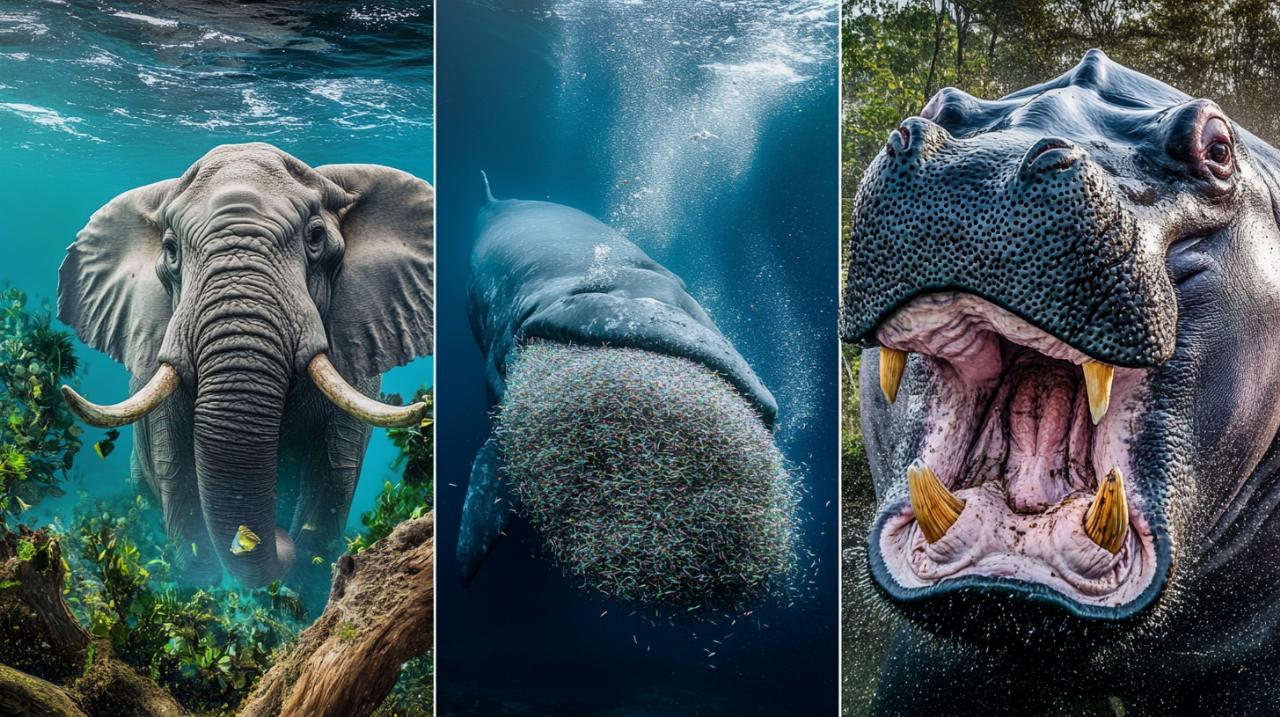
The blue whale, the largest animal on Earth, consumes up to forty million krill daily, amounting to roughly four tonnes of these tiny crustaceans. This staggering intake is achieved through a solitary feeding strategy known as lunge feeding, where the whale accelerates towards dense krill patches, engulfs vast quantities of water and prey, and then filters the water through baleen plates. Unlike elephants, blue whales do not rely on social groups to locate food; instead, they navigate ocean currents and seasonal migrations independently or in loose aggregations. The solitary nature of their feeding means that each whale must rely on its own knowledge and physical capabilities to meet its nutritional needs. In contrast, the giant anteater, which devours around thirty thousand ants and termites each day, also operates largely alone. Using a long, sticky tongue that flicks up to one hundred fifty times per minute, the anteater efficiently extracts insects from nests without causing excessive damage, ensuring a sustainable food source for future visits. While both the blue whale and the giant anteater are solitary feeders, elephants depend on the collective wisdom and cooperation of their herds, a distinction that underscores the unique role of social structures in shaping feeding behaviour.
Environmental impact of group-based versus individual feeding habits
The ecological footprint of elephants is profoundly influenced by their group-based feeding habits. As ecosystem engineers, elephants alter landscapes by uprooting trees, trampling vegetation, and dispersing seeds across vast distances. Their collective movements create pathways and clearings that benefit other species, while their role in seed dispersal supports forest regeneration and biodiversity. African forest elephants, in particular, are celebrated as gardeners of the forest for their ability to spread seeds far from parent plants, a service that may even contribute to climate change mitigation by fostering carbon-sequestering vegetation. In contrast, the environmental impact of solitary feeders like the blue whale and giant anteater is more localised. Blue whales, by consuming krill, help regulate populations of these crustaceans and influence nutrient cycling in marine ecosystems, but their impact is diffuse across the open ocean. Giant anteaters, by selectively raiding ant and termite mounds without destroying them, maintain a balance that allows insect colonies to recover and thrive. The group-based feeding habits of elephants, however, generate more dramatic and widespread ecological changes, shaping entire landscapes and influencing the survival of countless other species. This distinction highlights how social structures in elephants not only dictate their feeding behaviour but also amplify their role as architects of their environments, a responsibility shared collectively by the herd rather than shouldered by individuals alone.