
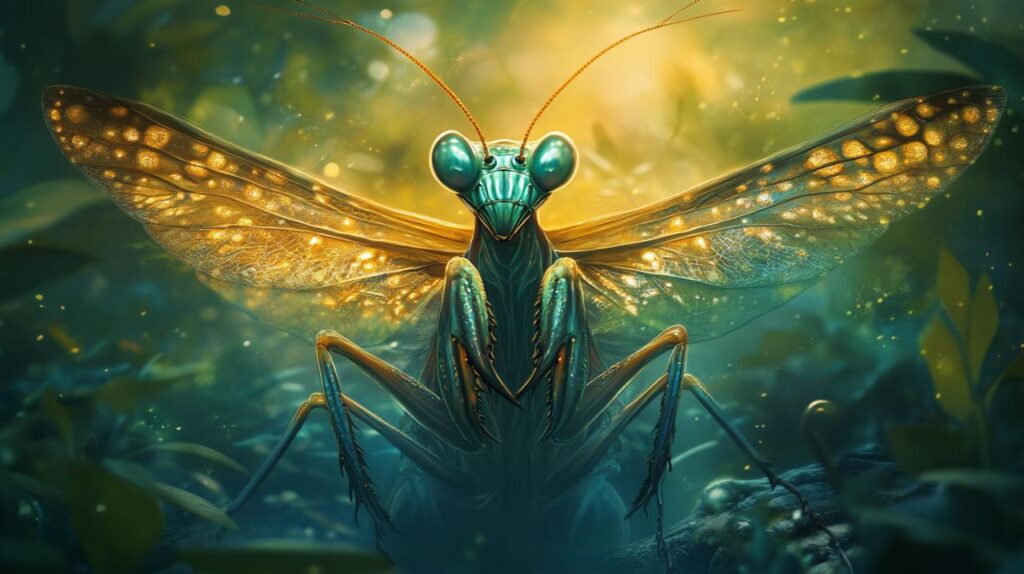
The praying mantis commands attention with its distinctive posture and serene presence, standing as a powerful emblem of patience and spiritual insight across countless traditions. This remarkable insect, with its triangular head and folded forelegs that mimic the stance of one in prayer, has captivated human imagination for centuries. Its ability to remain utterly still for extended periods, combined with its sudden, precise movements, offers profound lessons about the balance between contemplation and action. From ancient cultural narratives to modern interpretations, the mantis emerges as a guide towards mindfulness, inner strength, and the wisdom that comes from careful observation.
The Praying Mantis as a Symbol of Patience and Spiritual Wisdom
The praying mantis signifies adaptation, confidence, heightened awareness, and passion, serving as a spirit animal that encourages profound self-awareness. Its natural behaviour embodies the art of stillness, teaching observers the value of waiting and watching before committing to decisive action. This creature represents inner strength and serenity, qualities that resonate deeply with those seeking to cultivate a more contemplative approach to life's challenges. The mantis demonstrates that true power often lies not in constant motion but in the ability to remain composed, centred, and fully present in each moment.
Ancient Cultural Interpretations of the Mantis's Stillness
Throughout history, various cultures have woven myths associating the mantis with creation, spiritual guidance, and good fortune. The insect's remarkable patience has been interpreted as a divine quality, suggesting that those who embody such stillness possess a connection to forces beyond the physical realm. In folklore, the mantis frequently appears as a figure of transformation and the art of mimicry, capable of blending seamlessly into its surroundings while remaining alert and ready. This duality speaks to the importance of observation, of understanding one's environment fully before making any significant move. The mantis invites meditation and introspection for personal wisdom, urging individuals to look inward and discover their own truths through quiet reflection.
The prayer-like posture: bridging meditation and mindfulness
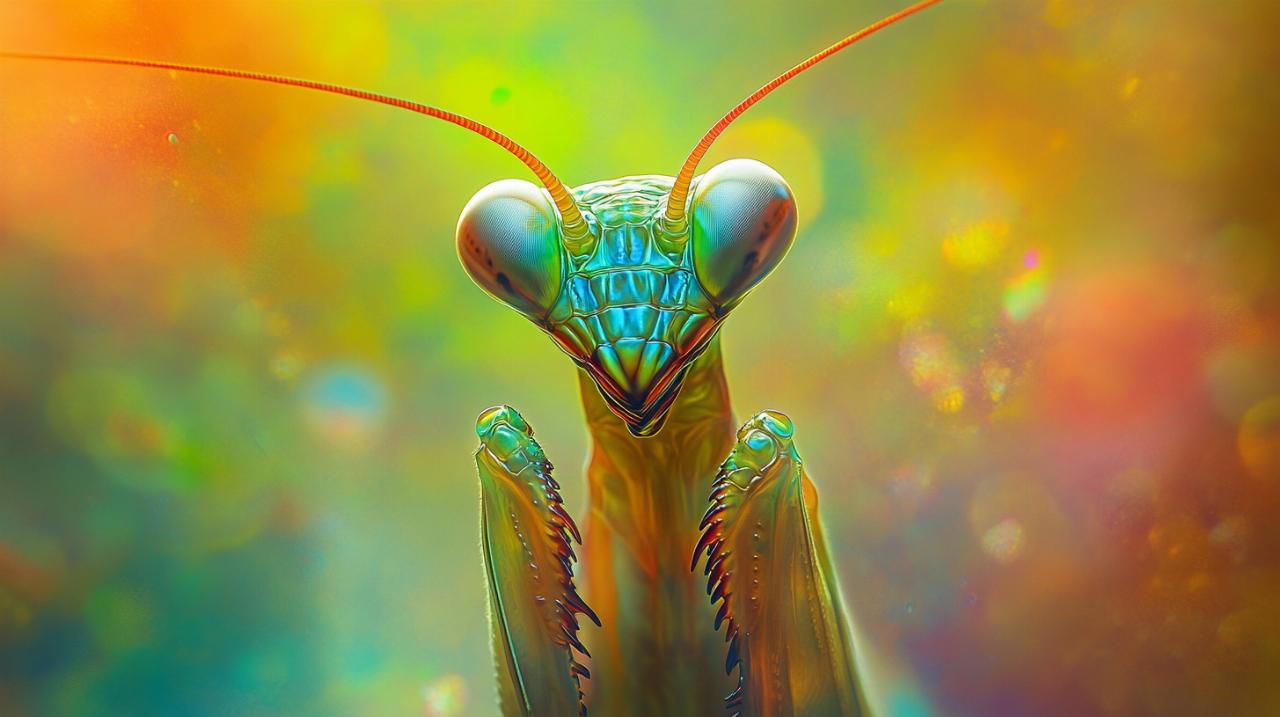
The distinctive stance of the praying mantis, with its forelegs held together as if in supplication, has long been associated with meditation and the practice of mindfulness. This physical resemblance to a posture of devotion is no mere coincidence in symbolic interpretation; it serves as a visual reminder of the need to pause, reflect, and engage with the present moment. The mantis encourages mindfulness and self-awareness, teaching that clarity emerges not from frantic activity but from stillness and focused attention. By observing the mantis, one learns to appreciate the profound power of simply being, of allowing thoughts to settle and insights to arise naturally. This approach fosters a deeper connection to one's inner life and cultivates the serenity necessary to navigate complex situations with grace.
Spiritual significance across global traditions and belief systems
Seeing a praying mantis can be interpreted as either good luck or bad luck, depending on cultural beliefs, yet the underlying message often centres on the importance of patience and assessing situations rather than rushing into action. The mantis stands as a reminder that wisdom often requires a willingness to wait, to observe, and to trust in the unfolding of events. It encourages patience, prompting individuals to resist the urge to act impulsively and instead to gather information, weigh options, and proceed with intention. This teaching resonates across diverse spiritual traditions, where the mantis is revered as a messenger of significant meaning and a guide towards balanced living.
The Mantis as a Messenger Between Physical and Spiritual Realms
The praying mantis is often perceived as a messenger, symbolically indicating a connection between the physical and spiritual worlds. Its presence is thought to signal moments when the veil between these realms grows thin, offering opportunities for heightened intuition and spiritual insight. The mantis embodies femininity and mystery, qualities that speak to the receptive, intuitive aspects of consciousness. Dreaming of a mantis may signify warnings about impatience or calling for spiritual guidance, suggesting that the dreamer is being encouraged to slow down, tune into subtle energies, and trust in unseen support. This role as an intermediary underscores the mantis's association with transformation, as it guides individuals through transitions and encourages them to embrace change with confidence and grace.
Reverence in Martial Arts: Grace, Discipline, and Natural Movement
In martial arts, the movements of the praying mantis embody grace and discipline, inspiring techniques that emphasise precision, timing, and economy of motion. The insect's ability to strike with lightning speed after remaining motionless for extended periods mirrors the martial artist's practice of conserving energy, waiting for the ideal moment, and then executing with focused intent. The mantis teaches the balance between stillness and decisive action, a principle that extends beyond physical combat to encompass all areas of life. This reverence for the mantis's natural prowess highlights the importance of aligning oneself with the rhythms of nature, of learning from the world around us, and of integrating those lessons into our daily practices. The insect's approach to movement and survival offers a masterclass in patience, observation, and the strategic use of one's resources.
The Praying Mantis in Nature and Artistic Expression
The fascinating aspects of the praying mantis make it a subject of interest in the arts, where its striking form and enigmatic behaviour inspire countless creative works. Artists and writers are drawn to the mantis not only for its visual appeal but also for the layers of meaning it carries. Its presence in nature highlights the cycle of life and balance, serving as a reminder that every creature plays a vital role in the web of existence. The mantis's predatory efficiency, combined with its delicate appearance, creates a captivating paradox that challenges simple categorisation and invites deeper contemplation.
Embodying life's balance: the mantis's role in natural cycles
In its natural habitat, the praying mantis plays an essential part in maintaining ecological equilibrium, controlling populations of other insects and contributing to the health of its environment. This role underscores the importance of balance, a theme that resonates deeply in spiritual teachings. The egg capsule of the mantis protects its young with a hardening foam material, a remarkable adaptation that ensures the survival of the next generation even in harsh conditions. This protective mechanism speaks to themes of resilience, care, and the continuation of life, reinforcing the mantis's association with good fortune and the cyclical nature of existence. By observing the mantis in its environment, one gains a greater appreciation for the interconnectedness of all life and the necessity of patience and timing in the natural world.
Artistic fascination: how the mantis inspires creative works
The praying mantis has long captivated artists, poets, and storytellers, who find in its form and behaviour a rich source of inspiration. Its elegant lines and mysterious demeanour lend themselves to diverse interpretations, from representations of quiet strength to explorations of the delicate balance between predator and prey. In visual arts, the mantis appears as a symbol of introspection and inner wisdom, its stillness inviting viewers to pause and reflect. In literature, it often serves as a metaphor for the power of patience and the rewards that come from careful observation. The insect's ability to blend into its surroundings while remaining ever alert speaks to themes of adaptation and transformation, qualities that resonate with audiences seeking meaning in an ever-changing world. Through these creative expressions, the mantis continues to inspire new generations, reminding us of the profound lessons that nature offers to those willing to observe and learn.