
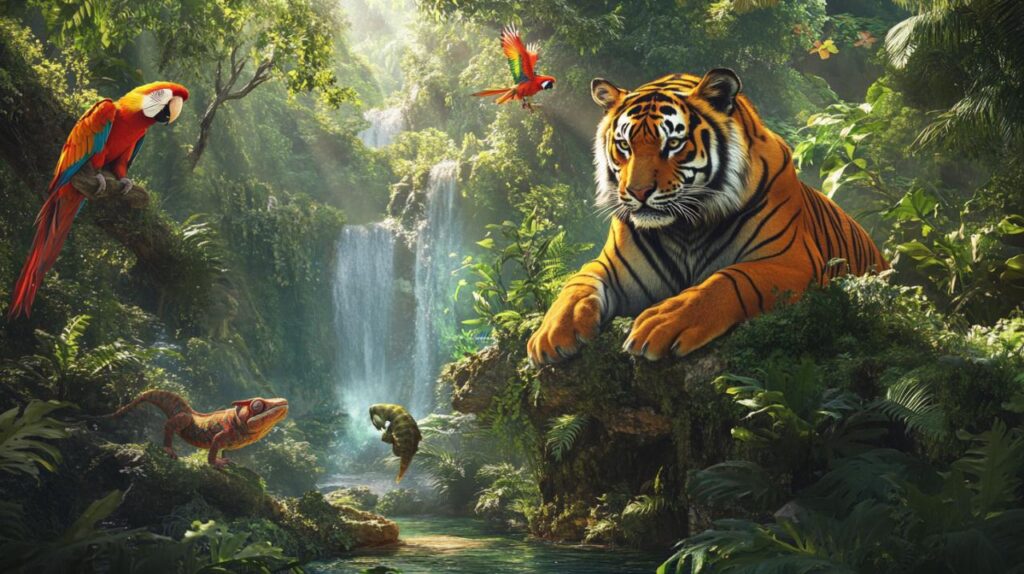
The modern natural world finds itself at a fascinating crossroads where native habitats increasingly intersect with species originating from distant corners of the globe. This blending of biogeographical boundaries raises important questions about how we understand and manage the delicate balance of life on Earth. As human activity continues to reshape landscapes and facilitate the movement of organisms across continents, the presence of non-native animals has become a defining feature of contemporary ecology. These arrivals challenge traditional notions of ecosystem stability while simultaneously offering fresh perspectives on adaptation, survival, and the resilience of nature itself.
Understanding exotic wildlife: classification and global distribution
Defining exotic species and their origins
When discussing exotic wildlife species, it is essential to clarify what sets them apart from their native counterparts. An exotic species is generally understood as an organism introduced to a region outside its natural historical range, whether through deliberate human intervention or accidental transport. Unlike indigenous wildlife that evolved alongside local flora and fauna over millennia, these newcomers arrive with no evolutionary ties to their new surroundings. Their origins can be traced to international trade routes, agricultural expansion, ornamental horticulture, and even the pet industry. The movement of these animals reflects broader patterns of globalisation, where barriers that once kept distinct ecosystems separate have been systematically dismantled. Understanding the pathways through which these species travel helps scientists predict future introductions and develop strategies to manage their presence effectively. The distinction between exotic and invasive is also crucial, as not all non-native species cause harm. Some integrate quietly into their new homes without disrupting existing ecological relationships, while others aggressively compete with local wildlife for resources.
Geographic hotspots for exotic wildlife populations
Certain regions around the world have become renowned for their concentrations of exotic wildlife, often due to unique environmental conditions or human activity. Island ecosystems, for instance, are particularly vulnerable to the establishment of non-native species because of their isolated evolutionary histories and limited biodiversity. Locations such as Hawaii, the Galápagos Islands, and New Zealand serve as prime examples where introduced mammals, birds, and reptiles have found fertile ground to establish robust populations. Similarly, urban environments in major cities across Europe, North America, and Asia have become unexpected sanctuaries for exotic animals. Parakeets now populate the parks of London, while raccoons roam through German suburbs, illustrating how human-altered landscapes can facilitate the spread of species far from their native territories. Warmer climates with abundant resources and fewer natural predators often see higher success rates for exotic populations. These hotspots are not static; climate change and shifting land use patterns continually reshape the global distribution of non-native wildlife, creating new opportunities for colonisation and complicating efforts to preserve native biodiversity.
The Ecological Impact of Exotic Species on Native Ecosystems
Invasive behaviour and biodiversity disruption
The arrival of exotic wildlife species can trigger profound disruptions within native ecosystems, particularly when these newcomers exhibit invasive characteristics. Invasive species often lack natural predators or diseases that would otherwise regulate their numbers, allowing populations to expand unchecked. This unchecked growth can lead to intense competition for food, shelter, and breeding sites, placing immense pressure on indigenous species that are ill-equipped to compete with such aggressive rivals. Predation by exotic animals poses another significant threat, especially on islands where native fauna evolved without defence mechanisms against mammalian hunters. Ground-nesting birds, for example, face catastrophic declines when introduced rodents or cats prey upon eggs and chicks. Beyond direct predation and competition, exotic species can also alter habitats in ways that make them unsuitable for native organisms. Burrowing animals may destabilise soil structures, while herbivores can overgraze vegetation, leading to erosion and the loss of critical plant communities. The cascading effects of these disruptions ripple through entire food webs, sometimes resulting in the local extinction of vulnerable species and a homogenisation of biodiversity that diminishes the ecological richness of affected regions.
Positive Contributions to Ecosystem Balance and Resilience
Despite the well-documented challenges posed by exotic wildlife, it would be an oversimplification to view all non-native species solely as ecological villains. In certain contexts, these animals can play beneficial roles that enhance ecosystem function and resilience. Some exotic species fill ecological niches left vacant by the extinction or decline of native species, thereby maintaining essential processes such as seed dispersal, pollination, or pest control. In degraded habitats where native fauna struggle to survive, exotic wildlife may contribute to vegetation management or nutrient cycling, inadvertently aiding in ecosystem recovery. There are also instances where non-native species provide valuable services to human communities, such as controlling agricultural pests or supporting local economies through ecotourism and wildlife observation. Furthermore, the presence of exotic animals can increase overall species diversity in certain environments, creating novel ecosystems that, while different from their historical states, nonetheless support complex and dynamic biological communities. This perspective encourages a more nuanced approach to wildlife management, one that recognises the potential for coexistence and adaptive management rather than pursuing blanket eradication policies. By carefully assessing the specific impacts and contexts of each exotic species, conservationists can develop strategies that balance the preservation of native biodiversity with the realities of an increasingly interconnected world.